Ideas worth sellingdon't start from zero.They start at 0.₂₅and I helpget to 1. I turn ideasinto revenue,between Southeast Asiaand the wider world.
about me
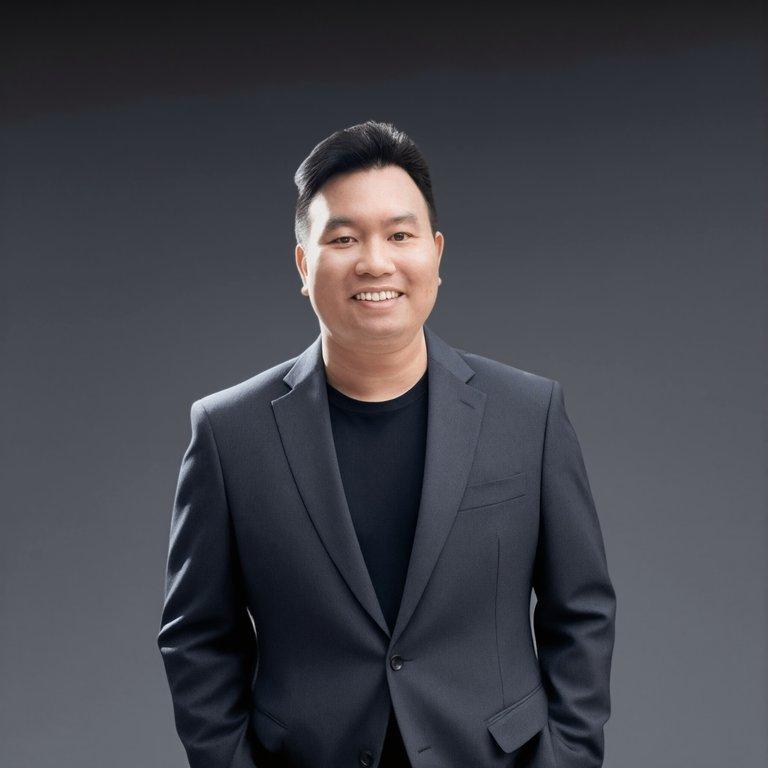
Sy Nguyen,
I help ideas that already work become businesses that sell. People often talk about going from zero to one, but in my experience very few projects start from a blank page. Usually the technology already runs, the market is either crowded or still taking shape, and the company has real resources behind it. I think of that starting point as 0.₂₅. The rest of the journey - deciding who will buy, why now, at what price, through which channel and on what proof - is commercialisation, and it is the work I care most about. Over 9 years, mostly helping multinational and overseas companies succeed in Vietnam, that work has led to a few results I am proud of. I built a business line from zero to $1.2M in its first year; for context, ChartMogul's 2025 data shows only about 3% of SaaS start-ups reach $1M in their first year of charging customers. I helped an overseas studio enter Vietnam with 18,000 players in the first month, 3.6 times a three-month target, at $21 per player against an $80 industry benchmark. And I brought the running cost of an in-house AI research tool down by 79%, roughly three times the 27-29% of cloud spend that companies typically estimate they waste (Flexera).
Why I start from 0.₂₅. Before building anything, I try to understand three things. The first is the foundation: does the idea actually work, and does it solve a problem people already pay to have solved? The second is maturity: how ready the technology is, and whether the market is saturated or still forming. The third is resources: the capital, team, distribution and reputation the company already has. When that reading is right, the remaining 0.75 stops feeling like a leap of faith. It becomes a sequence of decisions - validating the market, positioning, pricing, choosing a route to market, building proof and scaling the operation.
Where I have been most useful. I have done my best work in two kinds of market. In a saturated market, where products look alike, what customers believe and whom they trust often decide the sale; that is why, in one project, we sold more cement by helping homeowners rather than by talking about cement. In a brand-new category, the product is often ahead of the words buyers need to understand it; a play-to-earn game only took off once we positioned it honestly as the financial product it was. In both cases, communication is part of the business model rather than a cost on top of it. That is why I feel most at home in AI and applied technology, and in manufacturing and service businesses that compete on what they say as much as on what they make.
How I work. My work has two sides. Business Strategy is about finding the potential a company has not used yet - in its operation, its people, its capital and the owner's own convictions - and turning it into a business model, a go-to-market plan and a community. Business Applied AI is about putting new technology into that operation until it either earns or saves money. Both draw on what I learned in agency communications, on years of working beside CEOs and COOs, and on technical fluency I have built since 2009. I am a business person who can build a working prototype and estimate its unit cost, not a software developer, and that has helped me test ideas before recommending them.
Working between markets. Much of my career has been spent between a global brief and the Vietnamese market: global agency networks, a business operating in Vietnam and Singapore, multinational consumer and industrial groups, and an overseas studio launching here for the first time. In that role, I try to answer headquarters' assumptions with local evidence, adapt the offer rather than only the language, and keep teams in different time zones focused on the same number. I believe the same skills apply in both directions, whether an international company is coming into Southeast Asia or a Southeast Asian company is taking its product abroad.
A question I ask early. Before a project starts, I like to agree on which line of the P&L it should move and who will be responsible for it. Many AI projects end up beside a process rather than inside it, which is one reason so many companies struggle to point to the value they have created. I have also learned to lead without a title when the work needs it - for example, helping the heads of finance, operations, strategy and legal agree on one business model, or turning a company-wide AI rollout into service lines the company now prices and sells.
What I am looking for. I would like to take on an international, relocation-based commercial role connected to Southeast Asia or Vietnam, in market entry, business development, commercial strategy, go-to-market or country leadership. I am equally happy to work as a fractional strategy partner with founders and leadership teams who want to take a product from 0.₂₅ to 1. To be transparent about my record, I have built a business line and prepared the evidence base for an institutional raise, but I have not yet led a raise myself or owned a company-wide P&L. That is the responsibility I hope to grow into next.
expertise
- commercialisation & business strategy
- applied ai for business
- go-to-market & market entry
- community-led growth
- fundraising & investor material
- brand & marketing communications
- Built a business line from zero to $1.2M in its first year
- Helped an overseas studio enter Vietnam with 18,000 players in month one, 3.6 times a three-month target
- Reduced the running cost of an in-house AI research tool by 79%, so the whole company could use it
- Grew a brand community where members created about 70% of the content
- Helped a B2B brand gather 25,700 public posts in ten days for a clean-water project
- I start by understanding the 0.₂₅: what already works, how mature the market is, and what resources exist
- I agree on the P&L line and its owner before anything is built
- I treat communication as part of the business model, especially in crowded or brand-new markets
- I test ideas in real operations before recommending them
clients
Client names withheld1


experience
001.The foundation
IN 9 YEARS, MY WORK HAS MOVED FROM THE AGENCY BRIEF TO THE CEO'S TABLE.
My work rests on three foundations that arrived one after another. The agency years gave me communications strategy and a rule I still use: a message only counts when it changes what people do. Since 2009 I have taught myself to code, not to write software for a living, but to build a working version of an idea, learn its real cost and test it before I recommend it.
002.oRo Vietnam

AT ORO, WE TURNED APPLIED AI INTO SERVICE LINES WITH A CLEAR PRICE.
I work directly with the CEO on the company's new direction, which is to build growth ecosystems where technology, community and commerce reinforce one another. The idea is that marketing spend should build lasting assets rather than simply buy awareness.
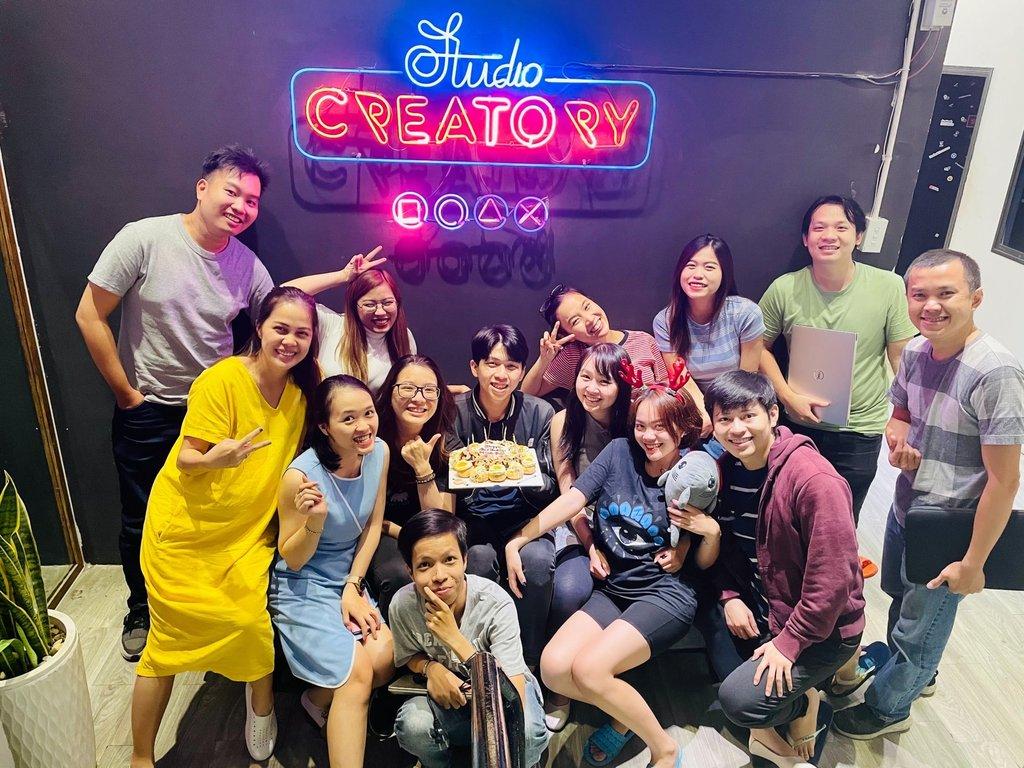
003.CREATORY
IN THIS ROLE, MY WORK MOVED FROM GIVING ADVICE TO OWNING THE OUTCOME.
From this point on, I stopped handing over recommendations and started answering for results. The work covered new revenue lines and readiness for fundraising, and each new unit had to stand on its own numbers.
004.CREATORY
WE BUILT COMMUNITY INTO A BUSINESS MODEL, AND IT EARNED $1.2M IN ITS FIRST YEAR.
The original brief was to reach Gen Z and Gen Alpha. The obvious answer would have been to pick a few influencers, but we chose to understand the creator economy from the inside and build growth strategies for the creators themselves. That way, the community belonged to the business instead of being rented one campaign at a time.
005.RED2 Digital
AT RED2, I LEARNED TO TIE MARKETING TO A NUMBER THE FINANCE TEAM ACCEPTS.
RED2 is a Vietnamese company working in Vietnam and Singapore, helping businesses move from traditional trade into digital channels. My part was to build the systems that link marketing to measurable revenue in both markets, so that a marketing budget no longer had to be an act of faith.
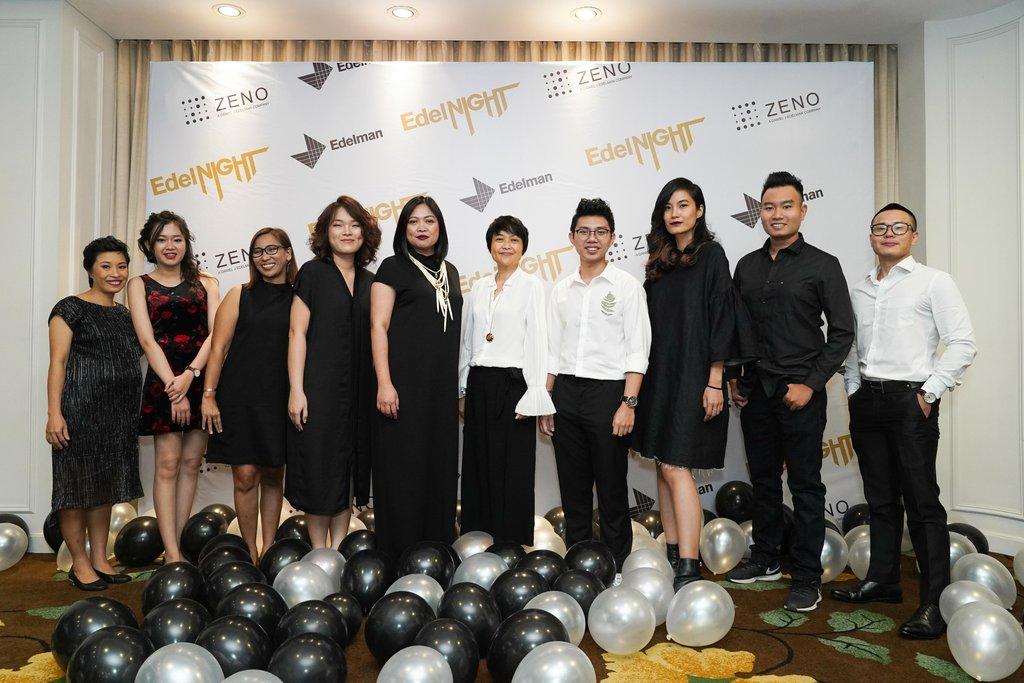
006.Edelman Vietnam

AT EDELMAN, I LEARNED THAT GOOD STRATEGY STARTS WITH TRUST.
Edelman is a global communications firm built around trust, and my work there was about building reputations rather than running campaigns about them. That meant corporate narrative, complex B2B communications, and messages that had to hold up for parents, engineers, regulators and investors at the same time.
007.Mullenlowe Vietnam
MY FOUNDATION WAS BUILT BY HAND, THROUGH DAY-TO-DAY EXECUTION.
I started my career at Mullenlowe, a network formed from a US agency and a British-European one. I ran day-to-day digital work for global brands and learned strategy from the ground floor, which was also my first lesson in making a global plan work in a local market.
008.University of Economics Ho Chi Minh City

THIS IS WHERE MY COMMERCIAL GROUNDING CAME FROM.
I studied Marketing, with an emphasis on research, trade marketing and brand communications. The habit that stayed with me from those years is that every argument needs evidence someone else can check.
009.Hoang Le Kha Gifted High School

THIS IS WHERE I LEARNED THE HABIT OF CHECKING MY OWN WORK.
I studied in the mathematics stream at Hoang Le Kha Gifted High School in Tay Ninh. The training there was simple to describe and hard to practise: state your assumptions clearly, then follow them honestly.
thoughts
001.The 2023 blackouts have passed; today's risks are price and the grid
ON 25 JUNE 2026, VIETNAM'S NATIONAL POWER SYSTEM HIT A RECORD PEAK OF 57,537 MW, AND IN THE FIRST HALF OF THE YEAR ELECTRICITY SALES GREW 10.2%, AND 13.1% IN THE NORTH, YET EVN KEPT SUPPLY SECURE (EVN, JUL 2026).
Many foreign companies still remember summer 2023, when northern Vietnam had rolling power cuts and many factories got little or no warning. The World Bank estimated the cost at about US$1.4 billion, or 0.3% of GDP. Since then, EVN has added to the grid quite quickly. The 519 km Circuit 3 500 kV line from Quang Trach to Pho Noi opened on 29 August 2024, and in the first half of 2026 alone, EVN energised 95 more grid projects. This summer brought repeated peak records, but I could not find any report of rolling power cuts.
what i'm looking for
« I would be glad to hear from you. If you are a recruiter or search partner hiring in Australia, Canada, the UK or Europe for a role connected to Southeast Asia or Vietnam - in market entry, business development, commercial strategy, go-to-market or country leadership - I am open to relocating. If you are a founder, CEO or business owner in those markets with a product that works but does not yet sell the way it should, I would be happy to work with your team as a fractional or retained strategy partner. Either way, tell me a little about the business and the number you want to move, and I will reply within 24 hours with how I would approach it. »
Write to me
- -
- Phone
- -
- Open to
- Relocation to Australia, Canada, the UK or Europe · fractional or retained strategy partnerships
- Roles
- Market Entry Manager · Business Development Manager, Southeast Asia / Vietnam · Commercial Strategy Manager · Go-to-Market Lead · Head of Growth · Country Manager, Vietnam
- Sectors
- AI and applied technology, manufacturing, consumer goods and services - saturated markets and new categories
- Based in
- Ho Chi Minh City, Vietnam · open to relocation (employer visa sponsorship required) · working hours overlap with Australia, the UK and Europe
- Occupation mapping
- Australia ANZSCO 224713, 131112 · UK SOC 2431, 2432, 3556 · Canada NOC 10022, 11201
- Languages
- Vietnamese (native), English (professional working)
© 2016 - 2026 Sy Nguyen